





Selection Comparison of Oval Gear Flow Meters and Coriolis Mass Flow Meters
Release time: 2026-09-14
Oval gear flow meters and Coriolis mass flow meters are both relatively high-accuracy solutions in industrial flow measurement and are often compared in the petroleum, chemical, food, and pharmaceutical industries. However, their measurement principles are completely different, and their applicable operating boundaries also differ significantly. The following comparison is made from three perspectives core principle, key performance dimensions, and typical scenarios to help engineering and technical personnel quickly make a selection decision.
I. Core Principle Difference: Volumetric vs. Mass Measurement
1.1 Oval gear flow meters are a type of positive displacement flow meter. A pair of precisely meshing oval gears rotates inside a metering chamber. Each revolution discharges four fixed volumes of liquid. The total volume that has passed through is obtained directly by counting the number of gear revolutions. The measurement result reflects volumetric flow rate. Its accuracy depends on the sealing between the gears and the chamber—the higher the viscosity, the smaller the clearance leakage, and the better the accuracy.
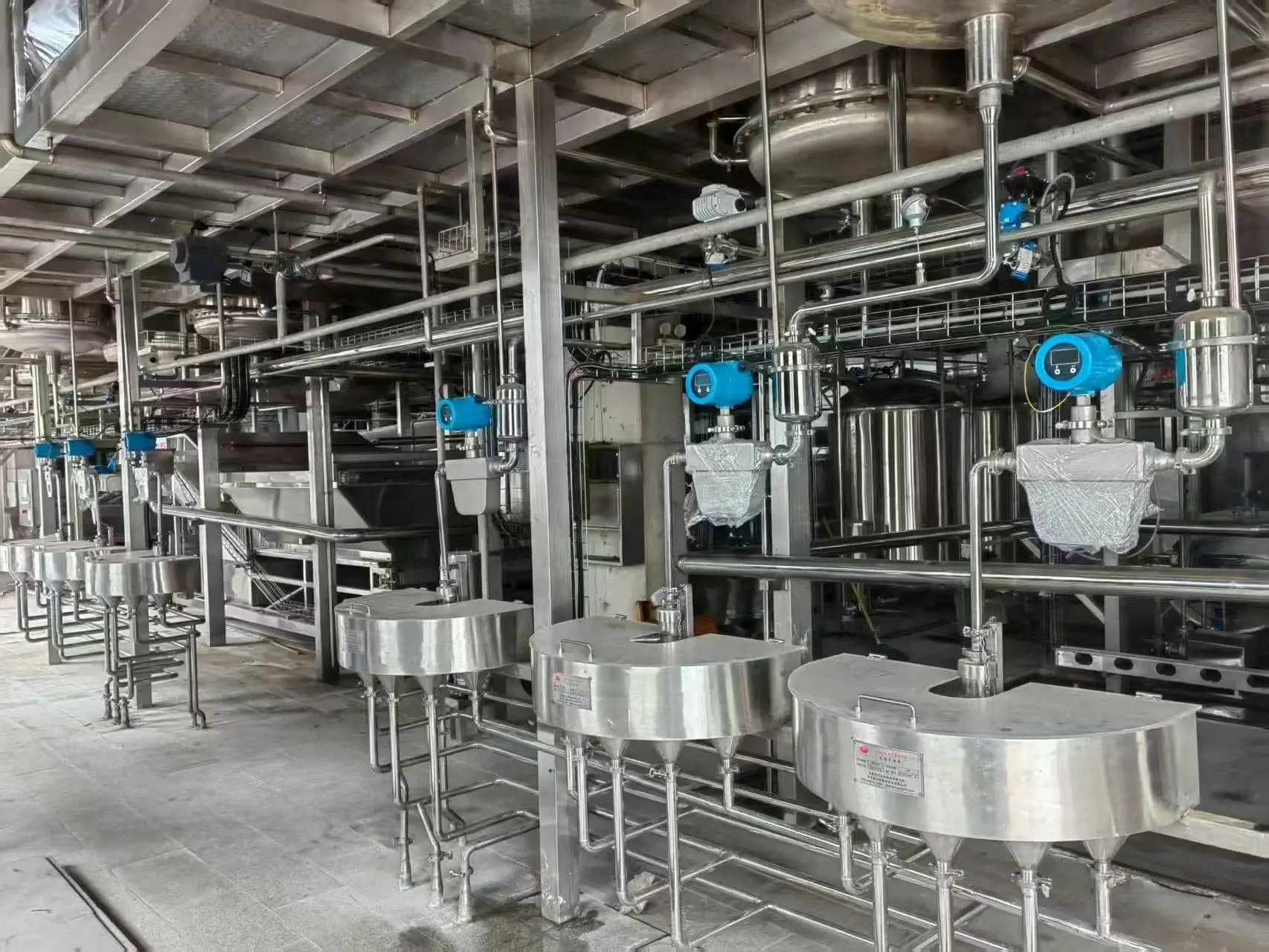
1.2 Coriolis mass flow meters are completely different. An electromagnetic driver vibrates the measuring tube. When fluid passes through the vibrating tube, the Coriolis effect generates a phase difference proportional to the mass flow rate. The sensor detects this phase difference and directly outputs a mass flow reading. The same vibrating tube can also simultaneously output fluid density and temperature data. Because mass is measured directly, the reading of a Coriolis flow meter does not drift with changes in temperature, pressure, or viscosity, and no additional temperature or density compensation is required.
II. Irreplaceable Advantage Scenarios for Each
2.1 Oval gear flow meters are more suitable for the following scenarios:
– Process metering of high-viscosity clean liquids: lubricating oil, hydraulic oil, gear oil, heavy oil, resin, syrup, etc. In these media, viscosity not only does not affect accuracy but actually improves the sealing effect, making the reading more stable.
– Small and medium-diameter, space-constrained installation environments: in skid-mounted equipment, mobile tank trucks, filling lines, and similar scenarios, the compact size of the oval gear flow meter is a significant advantage.
– Budget-sensitive projects with acceptable accuracy requirements: Class 0.2 accuracy can already meet most industrial process control and internal accounting needs.
– On-site metering without an external power supply: a mechanical register can directly read the totalized flow without power, making it suitable for remote or temporary metering points.
2.2 Coriolis mass flow meters are more suitable for the following scenarios:
– Trade settlement and legal metrology: in custody transfer of fuel oil, edible oil, and chemicals, ±0.1% accuracy and the characteristic of not drifting under changing operating conditions make it the preferred solution.
– Conditions with large fluctuations in medium temperature and density: when fluid temperature changes cause significant volumetric expansion or contraction, volumetric meters must provide compensation, whereas the direct mass output of a Coriolis flow meter inherently avoids this problem.
– Processes requiring simultaneous density or concentration measurement: concentration control in the food industry, recipe management in the chemical industry, density monitoring in the pharmaceutical industry, etc. The multi-parameter output of a Coriolis flow meter can eliminate the need for additional sensors.
– Media containing particles or two-phase flow: the design with no moving parts allows it to tolerate a certain degree of impurities; with entrained gas management, it can handle liquids containing gas.
– Continuous production lines that cannot be shut down regularly for maintenance: the maintenance-free characteristic greatly reduces the risk of unplanned downtime.