





Key Differences in Selection Between Oval Gear Flowmeters and Turbine Flowmeters
Release time: 2026-08-24

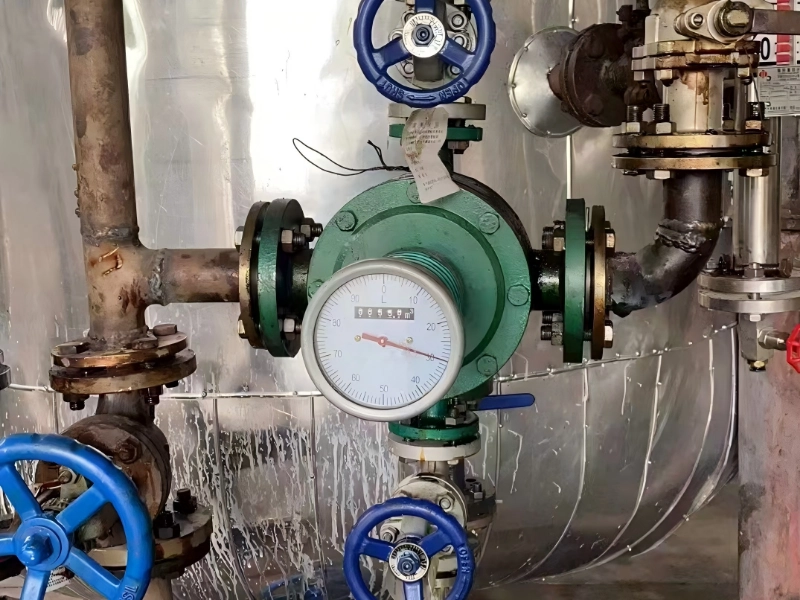
Key Differences in Selection Between Oval Gear Flowmeters and Turbine FlowmetersThe oval gear flowmeter and the turbine flowmeter operate on fundamentally different principles. The core selection criterion lies in the characteristics of the measured medium, especially viscosity.
In brief: high viscosity, low flow rates, and high accuracy applications favor the oval gear flowmeter; whereas low viscosity, large flow rates, and low pressure loss requirements make the turbine flowmeter a more economical choice.
Key Selection Parameters Compared
| Parameter | Oval Gear Flowmeter | Turbine Flowmeter |
|---|---|---|
| Measured Media | Ideal for high‑viscosity liquids such as heavy oil, resin, lubricating oil, etc. Higher viscosity reduces internal leakage, thus improving accuracy. | Suitable for low‑viscosity clean liquids like water, solvents, light oils, alcohol, etc. Not suitable for high‑viscosity media. |
| Accuracy | Very high, typically ±0.2% ~ ±0.5%. Accuracy is largely unaffected by viscosity or flow rate, especially at low flows. | Moderately high, typically ±0.5% ~ ±1%. Accuracy is more affected by fluid properties and flow velocity distribution. |
| Maximum Working Pressure | Standard models have lower pressure ratings (e.g., 1.6 MPa); high‑pressure versions can reach up to 6.4 MPa. | Easier to achieve high‑pressure ratings; high‑pressure models can exceed 25 MPa. |
| Working Temperature | Wider temperature range; high‑temperature models can operate up to approximately 280 °C. | Standard models typically have a maximum working temperature of about 120 °C. |
| Minimum Inlet Pressure | Requires a certain pressure to drive the gears; typically 0.3 ~ 0.8 MPa. | Very low requirement; essentially operates as long as there is flow. |
| Upstream/Downstream Straight Pipe Runs | Essentially no requirement; insensitive to installation location. | Stricter requirements, especially for small diameters, to ensure stable flow profile and maintain accuracy. |
| Tolerance to Particulates | Poor – solid particles can jam the gears, causing meter failure. | Relatively better, though the fluid should still be clean to avoid damage to rotor or bearings. |
| Pressure Loss & Maintenance | Higher pressure loss. The structure is precise, and maintenance costs are relatively higher. | Low pressure loss. Simple construction, compact, lightweight, and easier to install and maintain. |
| Signal Output | Traditional models are mechanical (totalizer only); electronic outputs usually require additional encoders or transmitters. | Easily integrated with electronics; can display both instantaneous and total flow, and provide remote transmission signals. |