





Application and Development of Pressure Sensors in Industrial Automation Control
Release time: 2026-07-14
I. Core Technology Principles
Modern industrial pressure sensors are primarily based on piezoresistive (diffused silicon), capacitive, and piezoelectric principles. To cope with complex industrial environments, their technological evolution shows the following trends:
- Intelligence and Integration – built‑in microprocessors enable temperature compensation, non‑linearity correction, and self‑diagnostic functions.
- Digital Communication – extensive support for fieldbus protocols such as HART, Profibus, and Modbus, allowing bidirectional data exchange.
- Material and Process Innovations – the use of ceramic, sapphire, or special alloy diaphragms improves durability under high‑temperature and highly corrosive conditions.
II. Key Application Scenarios
The role of pressure sensors in industrial automation has transcended mere “measurement” and has become deeply integrated into control and optimisation loops.
1. The “Feedback Core” in Process Control – Petrochemical and Pharmaceutical Industries
- Applications: reactor pressure monitoring, differential pressure control at the top/bottom of distillation columns, pipeline transport pressure regulation.
- Control Function: differential pressure measurements are used to infer flow and liquid level, forming PID closed‑loop control. For example, in polymerisation reactions, pressure values directly affect reaction rates; sensors provide real‑time feedback to regulate feed valve openings, ensuring that the reaction pressure remains within the safe and productive range.
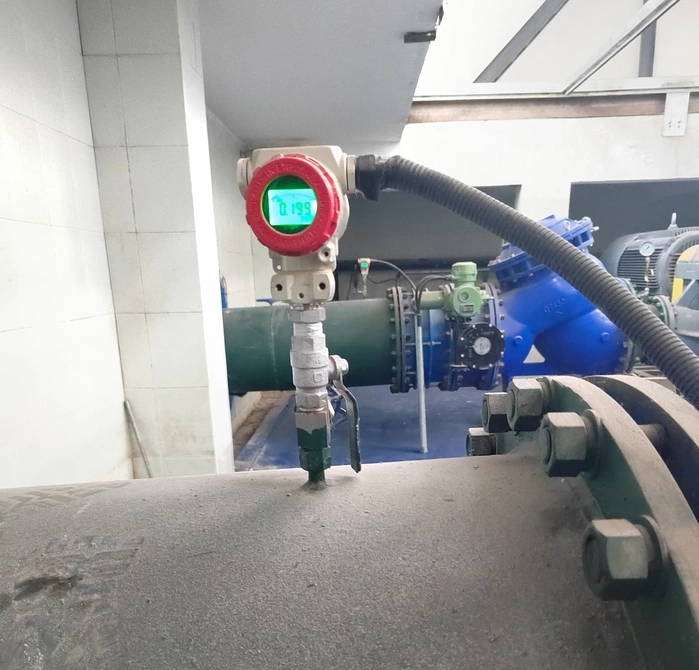
2. The “Stabiliser” in Fluid Conveying Systems – Water Treatment and Pumping Stations
- Applications: water supply network pressure monitoring, pump discharge pressure protection, clogging detection in filters.
- Control Function: enables constant‑pressure variable‑frequency control. The sensor converts pipeline pressure into an electrical signal, and the variable‑frequency drive adjusts the pump speed dynamically based on the deviation between the setpoint and the feedback value, achieving energy savings while preventing water hammer effects.