





Application Scenarios for Roots Flow Meters in Industrial Pipelines
Release time: 2026-07-10
Roots flow meters are widely used devices for gas metering in industrial pipelines. Known for their mature design and stable metering performance, they are frequently employed in applications involving natural gas, compressed air, and industrial fuel gases. When selecting equipment, enterprises often consider factors such as suitability for specific operating conditions, flow rate ranges, and installation environments. Let’s examine the practical application scenarios to see where Roots flow meters are most commonly used in industrial piping systems.
Table of Contents
Why are Roots flow meters suitable for gas metering?
Roots flow meters are positive-displacement meters that operate by “sequentially isolating” and “quantitatively conveying” gas within the pipeline. This mechanism allows for a direct response to gas flow and ensures consistent measurement accuracy. Compared to certain velocity-based flow meters, they typically perform better under low- to medium-flow conditions, making them particularly well-suited for industrial gas pipelines requiring long-term, continuous monitoring.
In settings such as natural gas transmission, compressed air systems, and industrial gas stations, enterprises prioritize instruments that offer accurate readings, stable operation, and ease of maintenance—key reasons why Roots flow meters are so widely adopted.
Where can they be used in industrial pipelines?
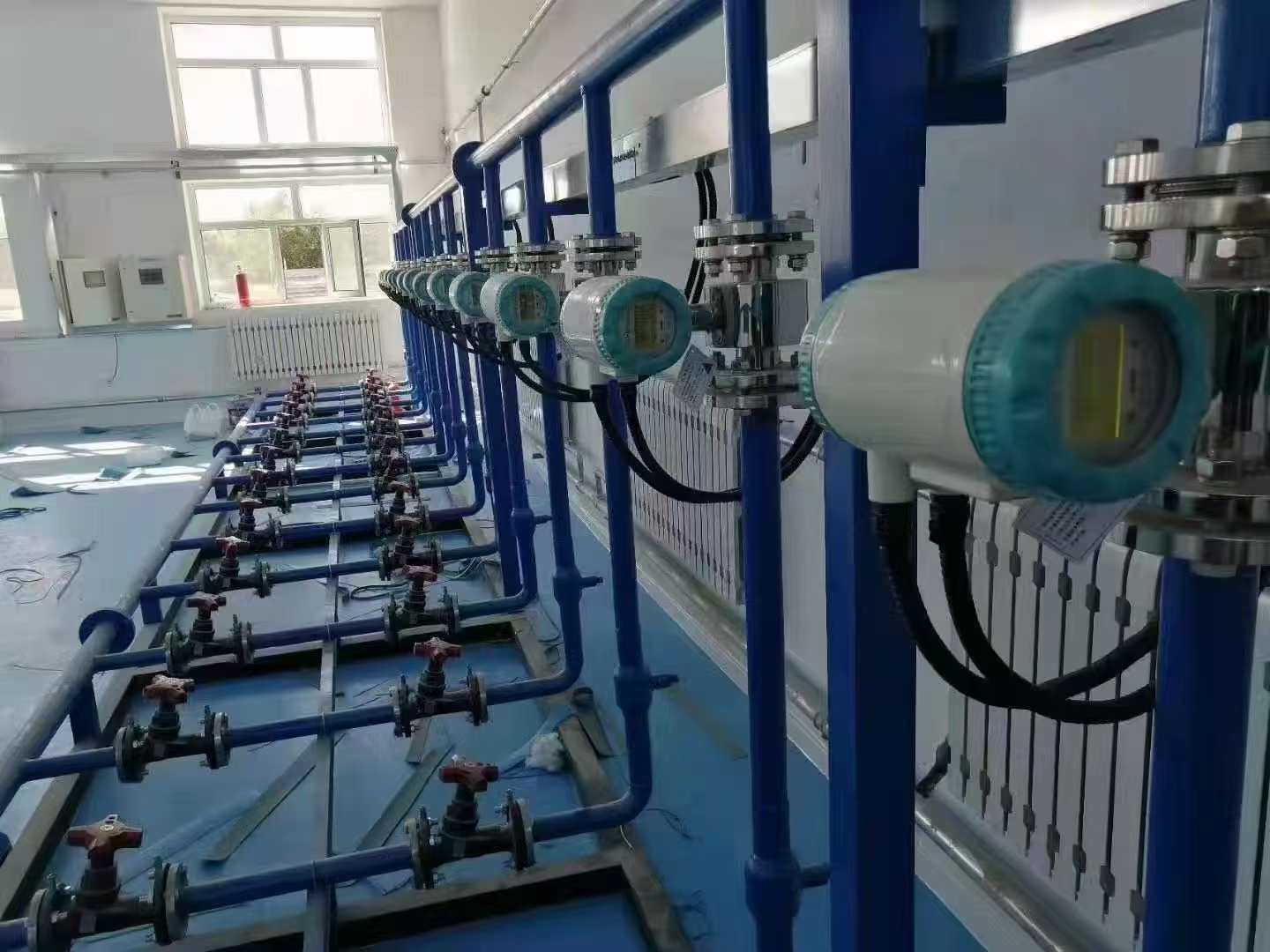
Roots flow meters have a broad range of applications. Common examples include natural gas pipelines, boiler gas supply lines, compressed air lines, nitrogen transmission lines, and process gas pipelines in the chemical and metallurgical industries. In these scenarios, gas flow rates directly impact cost accounting, production control, and energy management, making the reliability of metering equipment crucial.
For instance, in a factory’s compressed air system, a Roots flow meter can help track gas consumption across different workshops; in gas pipelines, it can be used for trade settlement, energy consumption statistics, and equipment performance monitoring. As long as the medium characteristics and pipeline conditions are compatible, the meter delivers stable and reliable performance.
Why do many enterprises prefer them for low-flow conditions?
Industrial pipelines do not always operate at full capacity; flow rates are often low and may even fluctuate. If an instrument performs inconsistently at low flow rates, the overall metering accuracy can be compromised. Roots flow meters are highly adaptable to such conditions, maintaining stable measurement performance across a wide flow rate range. This is why many enterprises select this type of meter for pipeline systems characterized by distributed gas usage points and relatively stable flow rates, yet requiring high measurement precision. It offers significant practical value for enterprises that need to monitor gas consumption over the long term and analyze energy consumption patterns.
What should be considered during installation in industrial pipelines?
Although Roots flowmeters are widely used, proper installation is crucial. Factors such as impurities, condensate, welding slag, or significant vibration within the industrial pipeline can impair the meter’s operation. This is particularly critical for gas pipelines; if the initial purging process is inadequate, impurities entering the flow meter can cause rotor jamming or measurement inaccuracies.
Additionally, factors such as installation orientation, upstream and downstream piping connections, straight pipe run requirements, and temperature/pressure compensation configurations all influence performance. For enterprises, the true measure of a meter’s utility lies not merely in its specifications, but in its suitability for the specific on-site operating conditions.
Roots flow meters are well-suited for various industrial gas pipelines, excelling particularly in applications requiring stable measurement, long-term monitoring, and energy consumption management. With proper selection based on the medium’s characteristics, flow range, and installation conditions—combined with correct installation practices—these meters typically provide enterprises with reliable flow measurement data.