


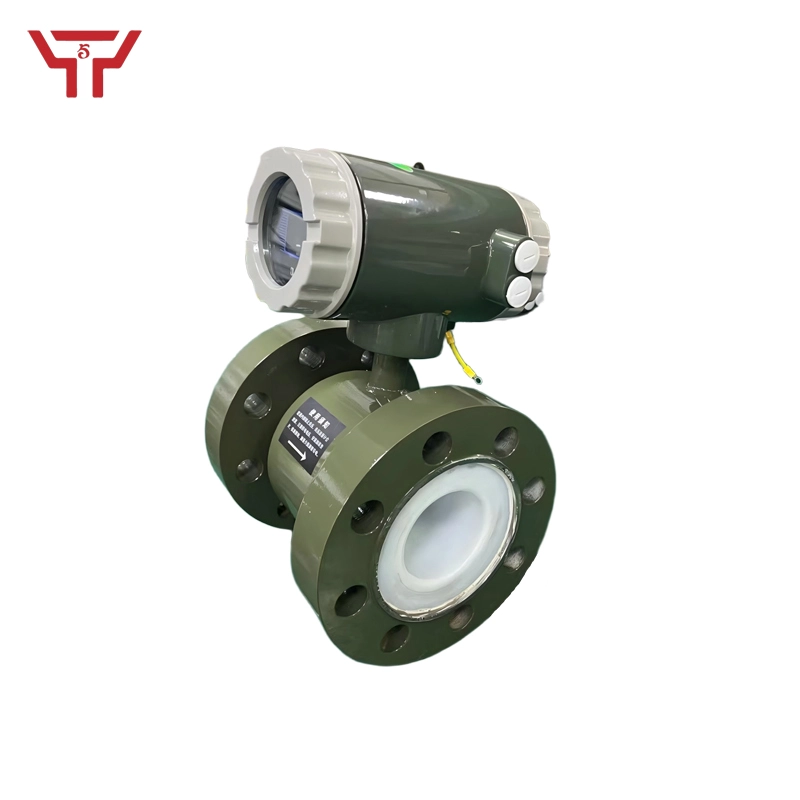
HomeProductsSpecial electromagnetic flowmeter for wastewater measurement
  • electromagnetic flowmeter
  • electromagnetic flowmeter
  • electromagnetic flowmeter
  • electromagnetic flowmeter
  • electromagnetic flowmeter
  • electromagnetic flowmeter
  • electromagnetic flowmeter
  • electromagnetic flowmeter
  • electromagnetic flowmeter
  • electromagnetic flowmeter
Products

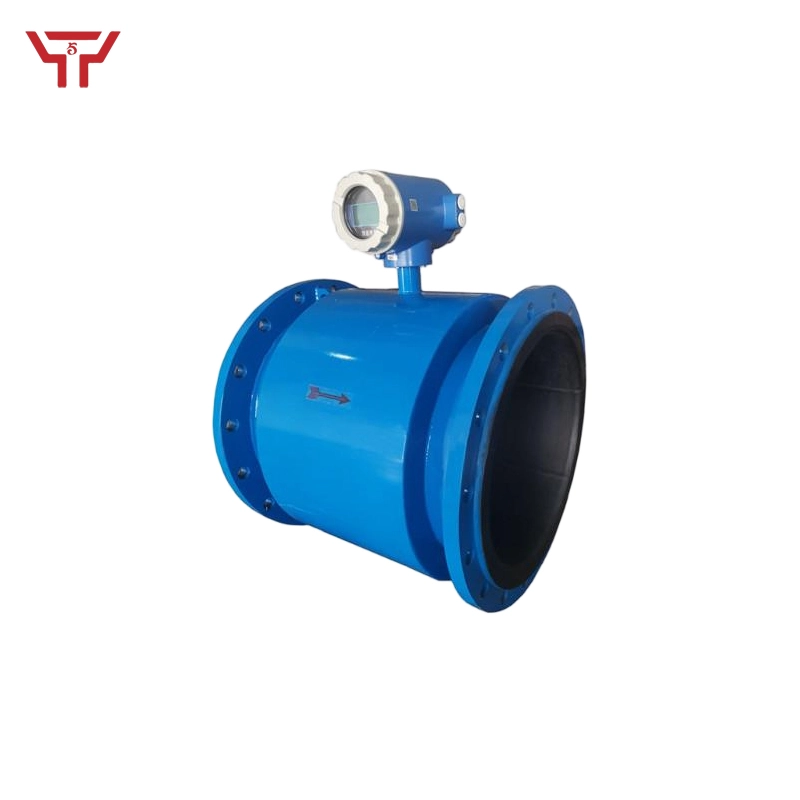
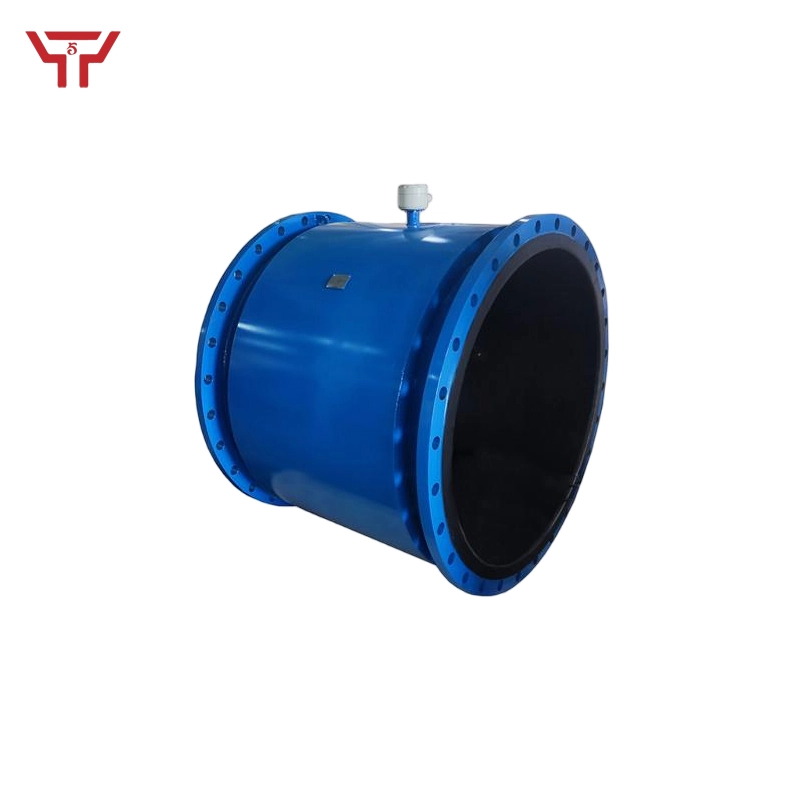
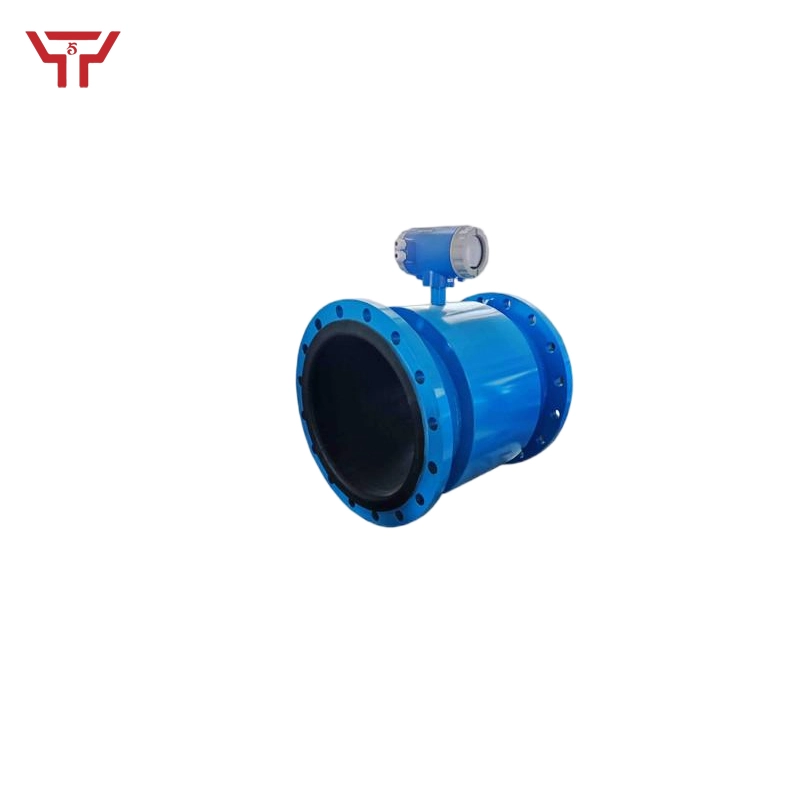
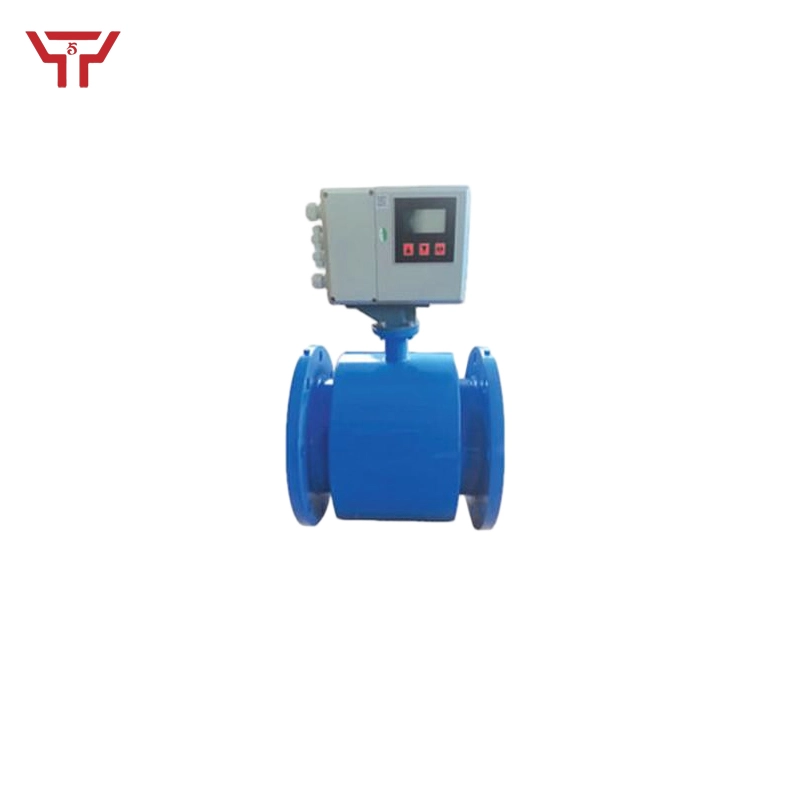
Special electromagnetic flowmeter for wastewater measurement

● Accuracy class:
Inline type: 0.2 class,0.5 class, 1.0 class

● Medium temperature range:
Standard rubber lining: -20~+60℃
High-temperature rubber lining: -20~+90℃
PTFE lining: -30~+100℃
High-temperature ethylene lining: -30~+180℃

● Rated working pressure:
Inline type: DN10—DN65: ≤2.5 MPa, DN80—DN150: ≤1.6 MPa,
DN200—DN1200: ≤1.0 MPa

● Flow measurement range:
Flow velocity range: 0.3–15 m/s

● Electrode materials:
Molybdenum-containing stainless steel, titanium (Ti), tantalum (Ta), Hastelloy (H), platinum (Pt), or other special electrode materials

● Protection class:
Submersible type: IP68; other types: IP65

● Power supply:
85–265 V, 45–63 Hz

Share:

  • Detailed Description

Principle of operation

The measurement principle of the electromagnetic flowmeter is based on Faraday’s law of electromagnetic induction. The measuring tube of the flowmeter is a non-magnetic alloy short tube lined with insulating material. Two electrodes are fixed on the measuring tube, penetrating the tube wall along the diameter direction, with the electrode tips essentially flush with the inner surface of the liner. When the excitation coil is energized by bidirectional square wave pulses, it generates a working magnetic field with a magnetic flux density B in a direction perpendicular to the axis of the measuring tube. At this time, if a fluid with a certain conductivity flows through the measuring tube, it cuts the magnetic field lines and induces an electromotive force E. The electromotive force E is proportional to the product of the magnetic flux density B, the inner diameter d of the measuring tube, and the average flow velocity v. The electromotive force E (flow signal) is detected by the electrodes and sent to the converter via a cable. The converter amplifies and processes the flow signal, then displays the fluid flow rate, and can output signals such as pulses and analog current for flow control and regulation.

Main Technical Parameters

Parameter

Specification

Nominal diameter series DN (mm)

PTFE lined (flow-through type):
10, 15, 20, 25, 32, 40, 50, 65, 80, 100, 125, 150, 200, 250, 300, 350, 400, 450, 500, 600
Rubber lined (flow-through type):
40, 50, 65, 80, 100, 125, 150, 200, 300, 350, 400, 500, 600, 800, 1000, 1200
Note: Special specifications can be customized.

Flow direction

Forward, reverse, net flow

Turndown ratio

150:1

Repeatability error

±0.1% of measured value

Accuracy class

Flow-through type: Class 0.5, Class 1.0

Medium temperature

Ordinary rubber lining: -20 ~ +60 °C
High-temperature rubber lining: -20 ~ +90 °C
PTFE lining: -30 ~ +100 °C
High-temperature PTFE lining: -30 ~ +180 °C

Rated working pressure

Flow-through type:
DN10 – DN65: ≤2.5 MPa
DN80 – DN150: ≤1.6 MPa
DN200 – DN1200: ≤1.0 MPa

Flow measurement range

Velocity range: 0.3 – 15 m/s

Conductivity range

Conductivity of measured fluid ≥5 μs/cm
(Most water-based media have conductivity in the range 200–800 μs/cm and are suitable for electromagnetic flowmeters.)

Output current and load resistance

4–20 mA fully isolated, load resistance <750 Ω
Pulse frequency 0–1 kHz, photoelectric isolated OCT, external power supply ≤35 V, max collector current 25 mA when conducting

Electrode material

Molybdenum-containing stainless steel, Titanium (Ti), Tantalum (Ta), Hastelloy (H), Platinum (Pt), or other special electrode materials

Protection class

Submersible type: IP68
Other types: IP65

Power supply

85–265 V, 45–63 Hz

Straight pipe length

Flow-through type: upstream ≥5 DN, downstream ≥2 DN

Connection type

Flange connection between flowmeter and piping; flange dimensions conform to GB9119-88

Explosion-proof mark

mdllBT4

Ambient temperature

-25 °C ~ +60 °C

Relative humidity

5% ~ 95%

Total power consumption

<20 W

Selection of materials for electrodes and grounding rings

Material

Corrosion Resistance

Molybdenum-containing stainless steel (OCr18Ni12Mo2Ti)

Nitric acid, <5% sulfuric acid at room temperature, boiling phosphoric acid, formic acid, alkaline solutions, sulfurous acid under certain pressure, seawater, acetic acid

Hastelloy C / Hastelloy B (HC, HB)

Resistant to oxidizing acids, oxidizing salts, seawater, non-oxidizing acids, non-oxidizing salts, alkalis, and sulfuric acid at room temperature

Titanium (Ti)

Seawater, various chlorides and hypochlorites, oxidizing acids (including fuming nitric acid), organic acids, alkalis

Tantalum (Ta)

All chemical media except hydrofluoric acid, fuming sulfuric acid, and alkalis, including boiling hydrochloric acid, nitric acid, and sulfuric acid below 175°C

Platinum (Pt)

Resistant to various acids, alkalis, and salts, except aqua regia

Instructions for the selection of lining materials

Lining Material

Name

Symbol

Performance

Max Operating Temperature

Applicable Liquids

Rubber

Chloroprene rubber

Moderate wear resistance; resistant to low concentrations of acids, alkalis, and salts

< 80°C

Tap water, industrial water, seawater

Rubber

Polyurethane rubber

Excellent wear resistance; poor acid and alkali resistance

< 60°C

Pulp, slurry, etc.

Fluoroplastic

Polytetrafluoroethylene

F4 or PTFE

Very stable chemically; resistant to boiling hydrochloric acid, sulfuric acid, aqua regia, and concentrated alkalis

< 180°C

Highly corrosive acid, alkali, and salt liquids

Fluoroplastic

Tetrafluoroethylene and hexafluoropropylene (Teflon FEP)

F46 or FEP

Slightly inferior chemical performance compared to PTFE

Corrosive acid, alkali, and salt liquids

Plastic

Tetrafluoroethylene and ethylene (ETFE)

F4 or ETFE*

Slightly inferior chemical performance compared to PTFE

Corrosive acid, alkali, and salt liquids

Plastic

Polyethylene

PO

Chemically stable

< 60°C

Sewage

Plastic

Polyphenylene sulfide

PPS

< 150°C

Hot water

Installation example

WhatsApp

Leave a message!

Leave a message!